Source Polished Mookaite Jasper Beads for Jewelry, Gifts, Decor
Find 30 listings for polished mookaite jasper beads suitable for jewelry making, home decoration, and holiday gifts. Buyers can compare strand lengths, hole sizes, and customization options from suppliers in Guangdong, China.
Key considerations
Products List


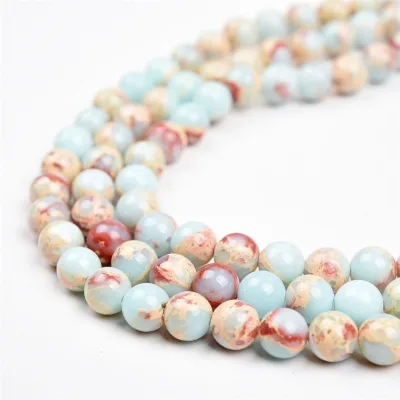
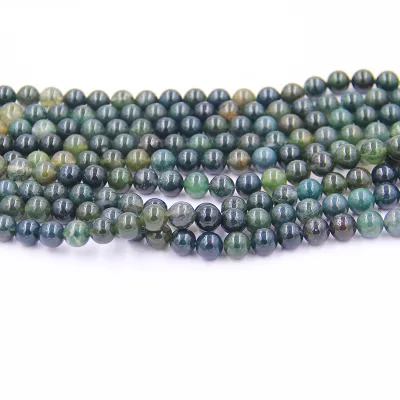
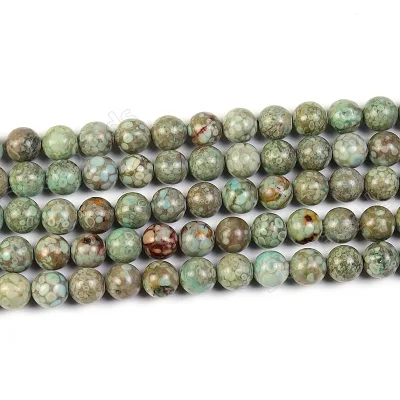
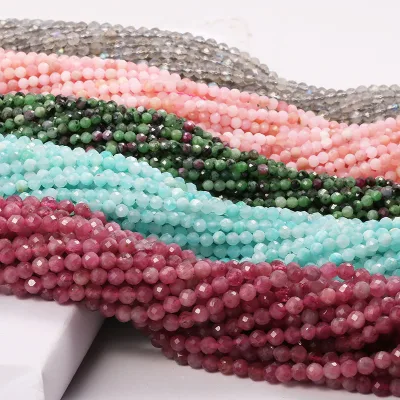
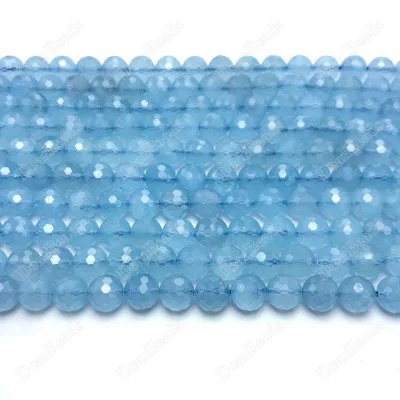
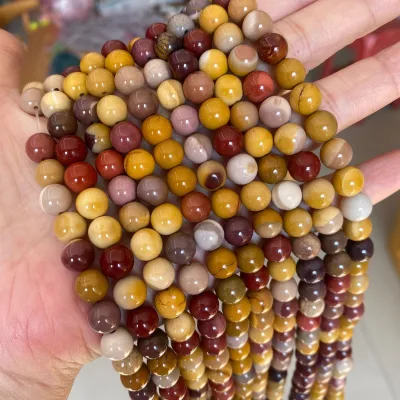
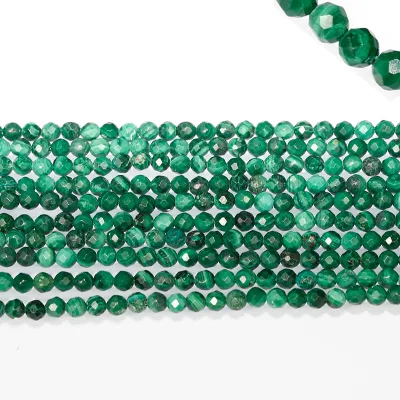


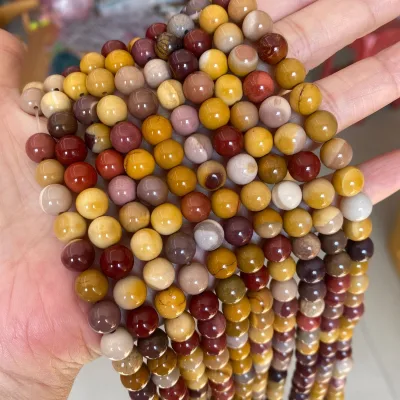
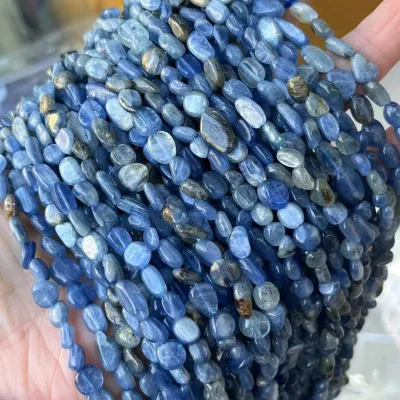


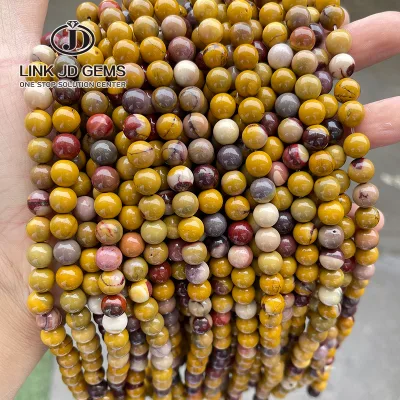

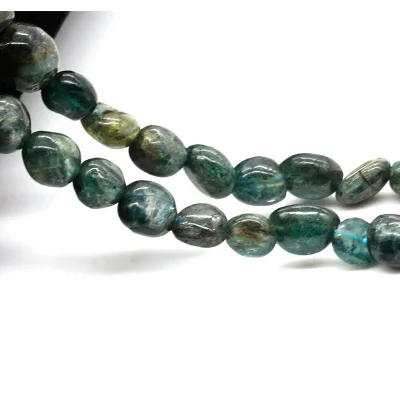
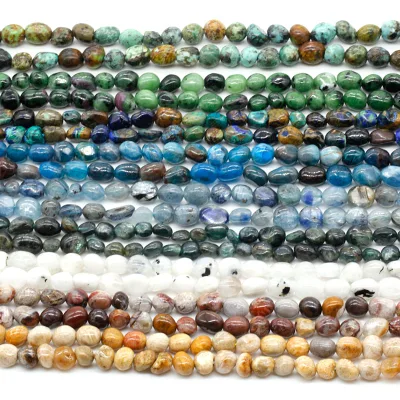
Comprehensive Sourcing Guide
Strategic Sourcing Guide for Polished Mookaite Jasper Beads
Understanding Product Specifications and Material Attributes
When sourcing polished mookaite jasper beads, buyers must first establish a precise understanding of the material's inherent characteristics and the specific technical parameters observed in the market. Mookaite is a natural stone, often characterized by its unique red, pink, and cream coloration, though the supplied data indicates a broader spectrum of available colors including brown, green, black, yellow, white, transparent, red, and purple. The core material classification is explicitly identified as "Natural Crystal" and "Stone," confirming that these are not synthetic or glass imitations. The transparency level is noted as "Translucent," which is a critical optical property for buyers seeking stones that allow light to pass through partially, enhancing the visual depth of the finished jewelry.
The physical form of the beads is predominantly "Round," though "Custom Shape" options are available to meet specific design requirements. A key technical specification observed in the product data is the hole size, which is standardized at 1mm in several listings. This dimension is vital for determining the type of stringing wire or cord that can be used during the manufacturing process. Buyers should verify if the 1mm hole size is consistent across all suppliers or if variations exist for different bead diameters. The standard bead sizes observed range from 4mm to 12mm, with specific models listing diameters of 4mm, 6mm, 8mm, 10mm, and 12mm. The strand length is typically standardized at 15.5 inches, which serves as a baseline for calculating the number of beads per strand and the total yield for a given project.
The surface finish is a defining characteristic of the "polished" descriptor in the core keyword. The supplied facts confirm that the production technique involves a "Polished" finish, resulting in a smooth, lustrous surface that enhances the stone's natural colors. This finish is achieved through mechanical tumbling or grinding processes that remove surface irregularities without altering the stone's structural integrity. The clarity is described with specific color groupings, such as "White, Black" or "Green, Brown, Black," indicating that while the stone is natural, the color consistency can vary. Buyers must understand that "Natural Crystal" implies inherent variations, and the term "Beads Colour: assorted" suggests that some suppliers may offer mixed-color strands rather than single-color uniformity.
Compliance, Certification, and Quality Verification
In the realm of natural stone procurement, compliance and certification are essential for ensuring that the products meet international trade standards and ethical sourcing requirements. The supplied data explicitly mentions a "Third Party Appraisal" as a certificate type. This indicates that reputable suppliers in this category often engage independent laboratories to verify the authenticity and quality of the natural stones. For buyers, this is a significant indicator of quality assurance, as it moves beyond self-declared claims to verified data. However, the specific standards or testing protocols for this appraisal are not detailed in the provided facts. Therefore, buyers should request detailed reports from the third-party appraiser to understand the specific tests conducted, such as spectroscopy or density measurements, which confirm the stone is genuine Mookaite Jasper and not a dyed or treated alternative.
The origin of the product is a critical compliance factor. The supplied information identifies the production location as "Guangdong, China." This region is a known hub for jewelry manufacturing and stone processing. While this location provides access to a robust supply chain, buyers must ensure that the supplier adheres to local environmental regulations and labor standards. Additionally, the "Third Party Appraisal" should ideally be from a recognized international body to ensure the certification is accepted in the buyer's target market. Buyers should verify if the supplier can provide documentation regarding the ethical sourcing of the raw materials, particularly given the increasing demand for conflict-free and sustainably mined stones.
Another aspect of compliance involves the packaging and shipping standards. The data notes that products are packed in "OPP Bag+Master Case" or "OPP Bag+Carton Box," with options for "Customized" packaging. This flexibility allows buyers to align packaging with their brand identity or specific retail requirements. However, the use of standard packaging materials like OPP (oriented polypropylene) bags must be evaluated for durability during transit. Buyers should verify that the master cases are robust enough to prevent damage to the beads, especially given the "Strand" packaging format which can be prone to tangling or breakage if not secured properly. The shipping methods listed include DHL, UPS, FedEx, EMS, and sea freight, offering various options for balancing speed and cost. Buyers must ensure that the chosen shipping method complies with the import regulations of their destination country, particularly regarding the declaration of natural stone products.
Cost Drivers and Pricing Dynamics
The pricing structure for polished mookaite jasper beads is influenced by several variables, including material quality, bead size, finish, and order volume. The observed price range in the market spans from $0.03 to $85 USD. This wide disparity suggests that the cost is heavily dependent on the specific attributes of the beads. The lower end of the range likely corresponds to smaller bead sizes, lower quality stones with more inclusions, or bulk orders with minimal customization. Conversely, the higher end of the range may reflect larger bead sizes (e.g., 12mm), premium color consistency, custom shapes, or small batch orders with specialized packaging.
The minimum order quantity (MOQ) is another significant cost driver. The observed MOQ range is between 2 and 1000 units. This flexibility allows buyers to test the market with small orders or scale up for mass production. However, buyers should be aware that lower MOQs often come with a higher per-unit cost due to the fixed costs of setup and processing. For large-scale procurement, negotiating a lower MOQ or a tiered pricing structure can significantly impact the overall cost. The payment terms, which include TT (Telegraphic Transfer), Western Union, PayPal, and Cash, also play a role in the financial dynamics. Buyers should consider the transaction fees and currency exchange rates associated with these payment methods when calculating the total landed cost.
Customization is a major factor that can drive up costs. The product data indicates that "Customization" is available and "OEM/ODM" is "Warmly Welcomed." This means buyers can request specific bead sizes, shapes, hole diameters, or packaging designs. While this adds value, it also introduces additional processing time and costs. Buyers should request a detailed cost breakdown for any custom requests to understand the incremental cost per unit. Additionally, the "Strand" packaging format may affect the cost, as it requires precise counting and bundling. Buyers should verify if the price includes the cost of the stringing material or if it is an additional charge.
Typical Applications and Market Usage
Polished mookaite jasper beads are versatile materials with a wide range of applications across various industries. The primary usage identified is "Jewelry Making," which encompasses the creation of necklaces, bracelets, earrings, and rings. The "Round" shape and "Polished" finish make these beads ideal for stringing into elegant designs that highlight the stone's natural beauty. The data also lists "Souvenir," "Home Decoration," "Holiday Gifts," and "Business Gift" as usage categories, indicating that these beads are popular for creating decorative items such as wind chimes, wall hangings, and gift sets.
The "Art & Collection" category suggests that these beads are also valued by artists and collectors for their unique aesthetic properties. The "Spiritual Growth" and "Energy Balance" benefits attributed to the stones in the product data further expand their market potential. Many buyers in the wellness and spiritual sectors source these beads for making meditation tools, chakra healing sets, and energy jewelry. The "Bracelet/Clothing/Diy" usage indicates that these beads are also popular for do-it-yourself projects, where individuals create their own accessories or customize clothing with bead embellishments.
The versatility of the beads is further enhanced by the availability of different colors and shapes. The "Custom Shape" option allows designers to create unique patterns and motifs that are not possible with standard round beads. The "Assorted" color option is particularly useful for creating vibrant, multi-colored designs that appeal to a broad audience. Buyers should consider the target market when selecting the specific attributes of the beads. For example, a brand focusing on high-end jewelry may prefer uniform, large beads with a premium finish, while a DIY craft brand may prefer smaller, assorted beads with a lower price point.
Supplier Evaluation and Selection Criteria
Selecting the right supplier is critical for ensuring the quality and reliability of the sourced polished mookaite jasper beads. The supplied data highlights several key attributes that buyers should use as evaluation criteria. First, the supplier's ability to offer "Customization" and "OEM/ODM" services is a strong indicator of flexibility and capability. Buyers should assess the supplier's experience in handling custom orders and their ability to meet specific design requirements. The "Warmly Welcomed" status of OEM/ODM suggests that the supplier is open to collaboration, but buyers should verify their track record in delivering custom projects on time and within budget.
The "Third Party Appraisal" certification is another important factor. Buyers should request samples of the certification documents and verify the credibility of the third-party appraiser. This ensures that the stones are genuine and meet the claimed quality standards. Additionally, the supplier's location in "Guangdong, China" should be considered in terms of logistics and communication. Buyers should evaluate the supplier's communication channels and response times to ensure a smooth procurement process.
The "Payment" terms, including TT, Western Union, PayPal, and Cash, should be reviewed to ensure they align with the buyer's financial policies and risk tolerance. Buyers should also consider the "Shipping" options, such as DHL, UPS, FedEx, EMS, and sea freight, to determine the most cost-effective and reliable method for their needs. The "Packaging" options, including "OPP Bag+Master Case" and "Customized" packaging, should be evaluated for their ability to protect the beads during transit and meet the buyer's branding requirements.
Quality Control and Inspection Protocols
Implementing a robust quality control (QC) protocol is essential for maintaining the integrity of the polished mookaite jasper beads. Buyers should establish clear criteria for inspecting the beads upon receipt. The first step is to verify the physical dimensions, including the bead diameter (4mm to 12mm) and the hole size (1mm). Buyers should use calipers to measure a random sample of beads to ensure they fall within the specified tolerance ranges. Any beads that deviate significantly from the specified dimensions should be rejected.
The surface finish is another critical quality attribute. Buyers should inspect the beads for a consistent "Polished" finish, free from scratches, pits, or uneven surfaces. The "Translucent" nature of the stones should be verified by holding them up to a light source to ensure they allow light to pass through as expected. The color consistency should also be checked, especially for single-color strands. Buyers should compare the beads against the provided color samples to ensure they match the agreed-upon specifications.
The packaging should be inspected for damage and integrity. The "Strand" packaging format should be checked for tangles or broken strands. The "OPP Bag+Master Case" should be examined for signs of wear or tear that could compromise the protection of the beads. Buyers should also verify the accuracy of the strand length (15.5 inches) and the number of beads per strand. Any discrepancies in the packaging or bead count should be reported to the supplier immediately.
Long-Term Procurement and Relationship Management
Building a long-term relationship with a reliable supplier is crucial for the sustained success of a jewelry or craft business. The "OEM/ODM" capabilities of the supplier suggest that they are equipped to grow with the buyer's needs. Buyers should focus on establishing a partnership based on mutual trust and clear communication. Regular communication regarding order status, production timelines, and any changes in requirements is essential for maintaining a smooth supply chain.
Buyers should also consider the scalability of the supplier. As the business grows, the demand for polished mookaite jasper beads will likely increase. Buyers should ensure that the supplier has the capacity to handle larger orders without compromising on quality or delivery times. The "MOQ" range of 2 to 1000 units indicates that the supplier can accommodate both small and large orders, but buyers should negotiate favorable terms for bulk purchases to maximize cost efficiency.
Finally, buyers should stay informed about market trends and developments in the natural stone industry. The "Benefits" attributed to the stones, such as "Energy Balance" and "Spiritual Growth," may evolve as consumer preferences change. Buyers should monitor these trends and adjust their product offerings accordingly to remain competitive. By maintaining a proactive approach to procurement and supplier management, buyers can ensure a steady supply of high-quality polished mookaite jasper beads for their business.
FAQs
What material are the polished mookaite jasper beads made of?
The beads are crafted from natural crystal and stone materials. They are not synthetic, ensuring authentic quality for jewelry making and decorative projects.
Which hole size is standard for these polished beads?
A standard hole size of 1mm is observed in the product listings. This dimension allows for the use of common stringing wires or cords during manufacturing.
Can buyers request custom shapes for these stone beads?
Yes, customization is available including custom shapes alongside standard round options. OEM and ODM services are warmly welcomed to meet specific design requirements.
What certifications verify the quality of these natural stone beads?
Products may include a third-party appraisal certificate to verify authenticity. This independent verification helps ensure the stones are genuine mookaite jasper and not imitations.
How are these beads typically packaged for shipment?
Beads are commonly packed in OPP bags within master cases or carton boxes. Customized packaging options are also available to align with specific brand or retail needs.
What payment methods are accepted for these jewelry beads?
Accepted payment methods include TT, Western Union, PayPal, and Cash. Buyers should verify specific terms with the supplier to ensure secure transaction processing.